Rising MacBook Prices Signal Shift in Laptop Market Dynamics for 2026
A new report from TrendForce highlights how recent price hikes in Apple's MacBook lineup are reshaping the laptop market, indicating a potential 13.6% decline in overall global shipments. Despite these challenges, Apple is projected to maintain a stronger position than the industry average.
Impact of MacBook Price Increases on Market Expectations
TrendForce notes that Apple's decision to raise prices reflects broader trends in the tech industry. The company isn’t insulated from rising costs associated with memory shortages and increasing component prices, which have affected many brands, including premium Windows laptops. This situation has led to a realignment of pricing in the laptop sector, creating a more considerable divide between entry-level models and premium options.
According to TrendForce, “Higher MacBook prices may narrow the price overlap between MacBooks and certain premium Windows notebooks, encouraging some price-sensitive consumers to switch to Windows devices.” However, this shift is expected to be limited due to overall rising prices across the board.
Here's the thing: Apple's price increase may enable some consumers to reconsider their options, but the reality is that many are already feeling the pinch. As production costs rise, so do retail prices, leaving consumers with fewer viable options. Looking at the numbers, Apple is anticipated to ship around 23.1 million notebooks in 2026, even as demand is expected to soften in the second half of the year. The initial strong demand in the first half, partly driven by upgrades to Apple Silicon, is keeping the company on course for double-digit year-over-year growth. Still, this momentum might not last.
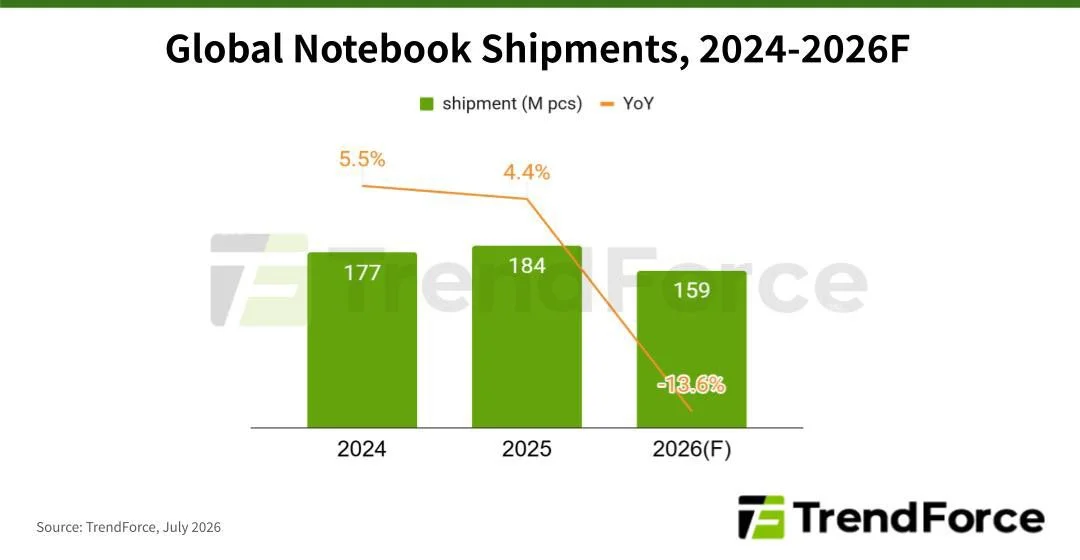
TrendForce elaborates, “Stronger-than-expected first-half demand means that a portion of second-half demand has effectively been pulled forward. As component costs are gradually passed through to retail prices, we’re starting to see signs of weakening consumer demand, particularly in the entry-level sector.” If you’re working in this space, you know that the consumer appetite for high-end features can wane rapidly if prices continue to outpace expectations. The question is: how many consumers will be willing to stick with Apple as prices rise?
Future Implications for Laptop Shipments
Looking at the broader implications, sustained demand for AI servers is expected to keep pressure on memory availability and semiconductor resources, thereby affecting component pricing. This situation could further deter consumers facing higher retail prices, leading to a significant drop in global laptop shipments for the year. As memory and component costs remain volatile, it's no surprise that manufacturers may find it challenging to maintain competitive pricing without sacrificing margins.
This doesn't bode well for the overall market, where many are already projecting declines. Apple's ability to withstand price sensitivity is arguably a byproduct of its brand loyalty. While premium Android devices are vying for market share, Apple's ecosystem remains uniquely appealing. Still, price hikes can tarnish even the most robust brand loyalty. TrendForce's predictions indicate that despite the challenges ahead, Apple remains on firm ground compared to its competitors, supported by its loyal customer base and the strength of its ecosystem.
Long-Term Outlook: Strategy and Market Position
What this means for you: Apple’s strategy of maintaining high margins while dealing with increasing production costs could lead to a reshuffling in its customer base. If the trend of rising prices continues, even loyal customers may seek alternatives that offer better value. Future laptop shipments from Apple could heavily rely on consumer feedback regarding pricing and features. TrendForce highlights that customer expectations are rising. Consumers aren’t just looking for attractive designs; they want value for their money. This brings us to the question of how well Apple can adjust its strategy.
Supply chain issues remain a significant concern, as trends suggest that higher demand for AI technologies may strain available components even further. Apple may need to innovate not just in terms of hardware but also in its marketing approach to justify these higher prices and retain its customer base. For instance, bundling services alongside hardware could soften the blow of increased costs, as customers feel they’re getting more than just a laptop.
For more detailed insights, check out TrendForce's full report here.
If you’re interested in related products, take a look at some popular items available on Amazon, including the recently released AirPods Pro 3 and the MacBook Neo.