New iOS Update Brings Liquid Glass Design to the NYTimes App
The New York Times app on iOS has embraced Apple's Liquid Glass design with its most recent update, enhancing user experience while keeping its established look intact.
Liquid Glass Introduced in the NYTimes iOS App
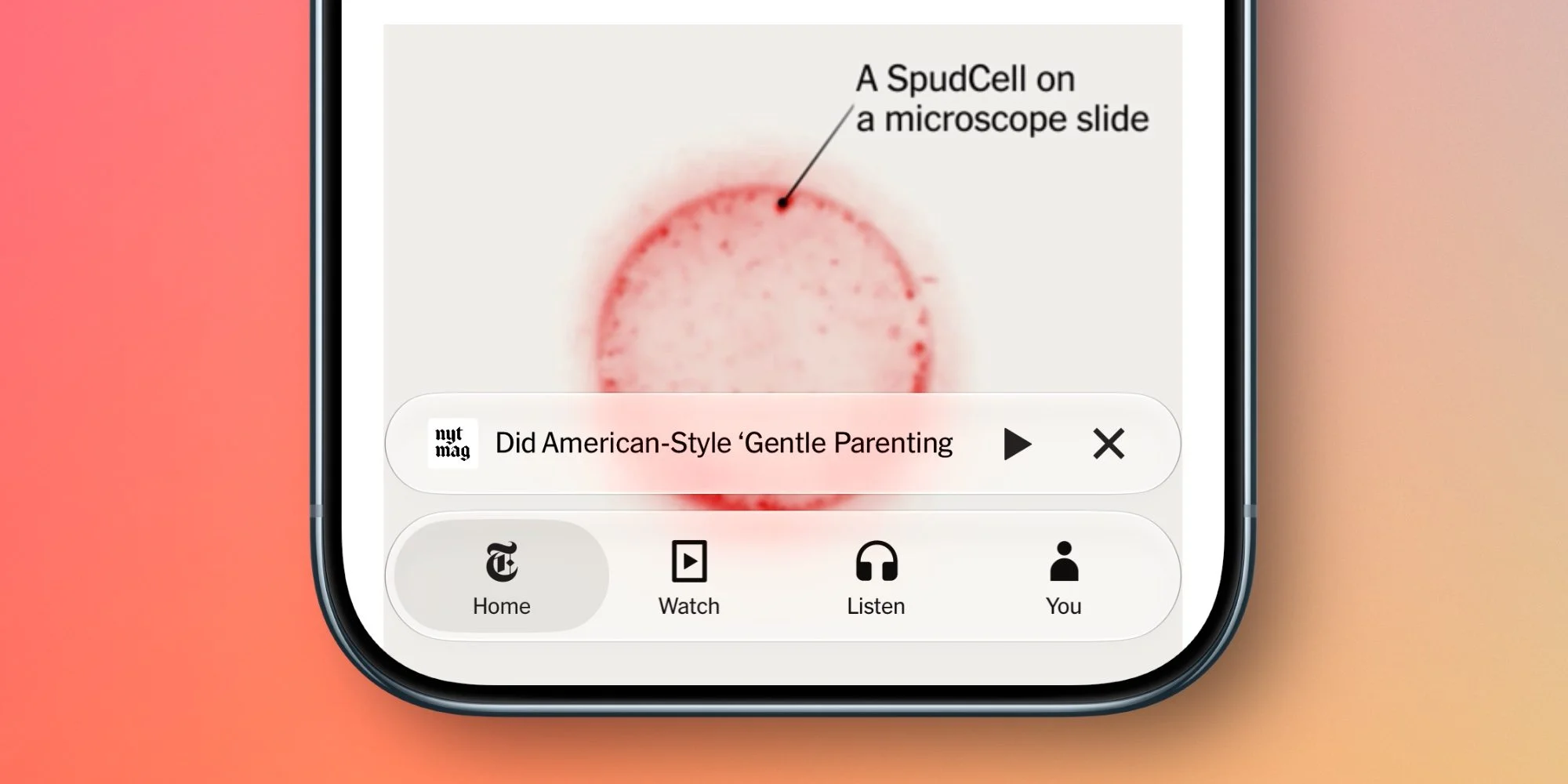
Initially launched in iOS 16, Apple's Liquid Glass feature has made its way into a variety of apps, signaling a trend toward more contemporary design elements on mobile platforms. This particular update for the NYTimes app wasn't just an aesthetic choice; it reflects a broader strategy among notable applications to maintain relevance in a competitive digital environment. We've seen other industries adopt similar design philosophies, moving from functional interfaces to ones that blend utility with visual appeal.
The NYTimes recently updated its app to include this design philosophy within its main navigation and audio player interface. Interestingly, the implementation of Liquid Glass here is minimal, primarily affecting the navigation tab and the compact audio player. This approach mirrors a trend where established applications integrate modern aesthetics without undergoing significant redesigns. It seems that these apps are prioritizing gradual aesthetic updates over full-scale revamps, likely to maintain user familiarity while freshening the experience just enough to stay current.
While this conservative adoption of Liquid Glass might not ring in a monumental shift, it’s a positive enhancement aligning the app with the modern design language that’s permeating iOS. Many developers are opting to incrementally modernize their interfaces, integrating elements that enhance usability while refusing to fully abandon the designs that their users know. The arrival of Liquid Glass also indicates a gradual momentum toward wider adoption by other applications ahead of the impending iOS 17 release—something that could very well reshape how we interact with these platforms.
Context and Implications of Liquid Glass Design
The Liquid Glass design has its roots in Apple's ongoing pursuit for elegance and minimalism across its ecosystem. Similar systems typically emphasize clean lines and fluid transitions, creating a sense of continuity that appeals to users. This current iteration in the NYTimes app shows an understanding of that ethos without risking user uproar; the interface remains largely unchanged. (And this is the part most people overlook.) User retention often hinges on gradual adjustments rather than sweeping changes that can alienate long-term customers.
What this means for you, the user, is a simpler, more visually engaging experience that doesn’t require relearning app navigation. For the NYTimes, whose readership spans various demographics, this thoughtful update could bolster user engagement. Aligning visual design with consumer expectations laid out by Apple's design choices could foster a deeper connection to their audience. Users appreciate interfaces that reflect modern aesthetics while still prioritizing information delivery—a struggle not just for newspapers, but for many time-honored brands struggling to stay relevant.
You might wonder why the Liquid Glass update was rolled out to the NYTimes before other apps that have also been on iOS for years. It’s a classic case of selective updates addressing specific user interfaces—targeting components like navigation that are immediately visible to users. The audio player, a crucial part of the modern news consumption journey, also captures attention. The NYTimes is clearly aware that auditory storytelling is increasingly merging with traditional articles, making this update feel particularly timely.
Broader Design Trends Across Apps
As apps integrate features like Liquid Glass, they are also facing pressure to adapt to user preferences that shift constantly. Recent updates from other apps underscore this growing trend. For example, applications like iA Writer, Microsoft Outlook, Pocket Casts, and WhatsApp have also rolled out Liquid Glass implementations. These updates often focus on enhancing visual clarity and providing a more cohesive aesthetic within the user interface, which reflects a larger movement toward unified design principles across platforms.
Apps that have successfully adopted Liquid Glass are not merely following a design trend; they are responding to user expectations for accessibility and functionality. Many users now seek a visually appealing experience that still feels intuitive. Essentials within the design—like spacing, color palette, and interaction patterns—must appeal to users who are frequently toggling between different applications. The challenge lies in striking a balance; you've got to keep the user experience smooth while still pushing the boundaries of visual engagement.
Future Outlook for Liquid Glass Design
The gradual implementation of Liquid Glass across various apps hints at a significant future for design in mobile interfaces. With iOS 17 on the horizon, developers are likely to broaden their incorporation of such visually rich elements. Developers can learn from the incremental rollouts like those seen in the NYTimes app. Instead of risking user dissatisfaction with sweeping changes, they might achieve better customer retention through smaller, satisfying tweaks that align with user familiarity while gradually introducing modern touches.
So what's the ultimate takeaway? It seems that the Liquid Glass design could set the stage for more extensive updates in the Apple ecosystem. This is particularly relevant for developers who should keep a keen eye on user feedback when making design choices. As app stores become more overcrowded, those that find a way to marry aesthetic appeal with functional user experiences will likely emerge as frontrunners in a market that gives as much weight to looks as it does to usability.
What do you think about this direction? How much does design matter in your daily app usage?
For insights into additional apps that have recently undergone Liquid Glass transformations, consider exploring the updates from:
- iA Writer 8 for clear icon integration
- Microsoft Outlook for Mac with an app-wide update
- Pocket Casts enhancing its podcast interface
- WhatsApp expanding Liquid Glass support
What’s your take on the implementation of Liquid Glass in the NYTimes app? Share your thoughts in the comments.