Kubernetes Workload Identity: How Short-Lived Tokens Secure Cloud Access
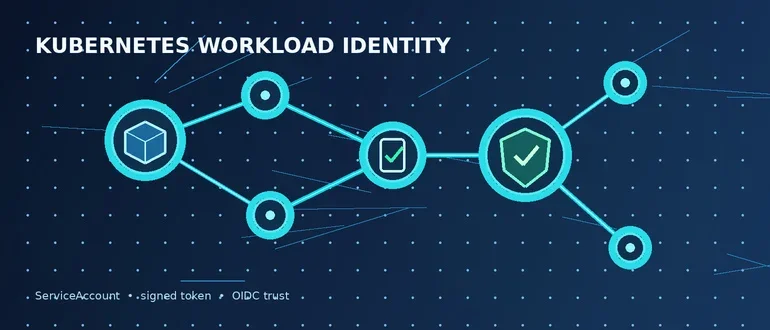
Kubernetes workload identity links ServiceAccounts to verifiable, short-lived tokens, enabling federated cloud access while clarifying authentication and authorization.
Development operations, CI/CD, and automation
Found 373 articles
Kubernetes workload identity links ServiceAccounts to verifiable, short-lived tokens, enabling federated cloud access while clarifying authentication and authorization.
A Bronto review maps 64 AI SRE tools across seven categories, showing how products sharing one label tackle different operational problems.
The A3 framework assigns AI tasks to Assist, Automate or Avoid, with task-specific checks and monthly audits to catch drift before it reaches customers.
Senro turns pipelines into Go programs with immutable plans, step caching, monorepo fan-out, change-based filtering, and webhook trigger decisions.
Distributed requests expose the limits of chart-based monitoring, pushing SRE teams to seek clearer explanations of system failures.
Delta Lake UniForm, Unity Catalog and private connectivity can connect Snowflake to Databricks-owned data without nightly exports.
The companies will resell each other’s hardened software artifacts as teams face rising dependency risks and a persistent gap between security priorities and practice.
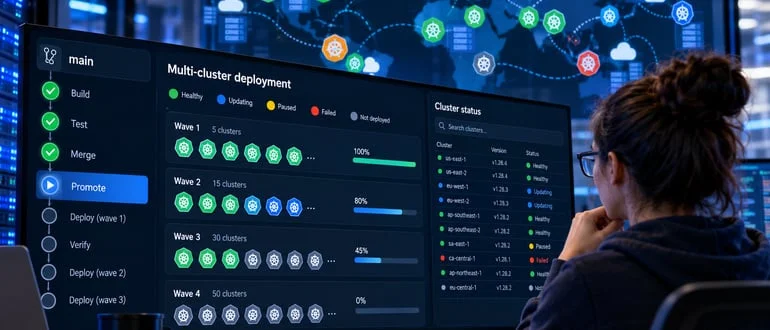
At hundreds of clusters, GitOps needs release tracking and verification gates to make staged rollouts safe and visible.
IaC makes Kubernetes upgrades and hybrid infrastructure changes reviewable, while letting AI agents prepare changes for human approval.
Regulatory data pipelines need to explain where each figure came from, who changed it and why—not just produce reports quickly.
Mamori points to a lighter way for Go services to pick up Kubernetes config changes without dropping active requests or rebuilding connection pools.
Google Cloud Secret Manager’s version model can leave Go services pinned to startup values; mamori addresses that with live reloading.
Enterprise language choices need a business thesis: weigh delivery speed, operational risk, talent costs and cross-platform consistency.
Flink’s built-in CEP finds ordered event patterns across time, addressing a class of real-time problems that filters and aggregates don’t cover.
METR’s estimate puts Claude Opus 4.6 at 17.8 hours on clean tasks and 6.4 on messy ones, highlighting the value of recovery and adaptation.
A 900 GB Prometheus deployment faced query timeouts, rising cardinality and SaaS costs, with little room for monitoring overhead.
Visa SRE Sai Joshitha Kathari moved Kubernetes health checks into Jenkins, giving teams faster rollout feedback and clearer paths to failures.
Kubernetes pods can remain stuck in a Pending state, highlighting the challenges of effective scheduling even when resources appear available.
Tackle SQL performance issues head-on with the Query Store tool, which retains valuable execution data even after server restarts.
AI adoption is more than just access; it’s about effective integration into workflows. Here's how teams can measure true AI maturation.