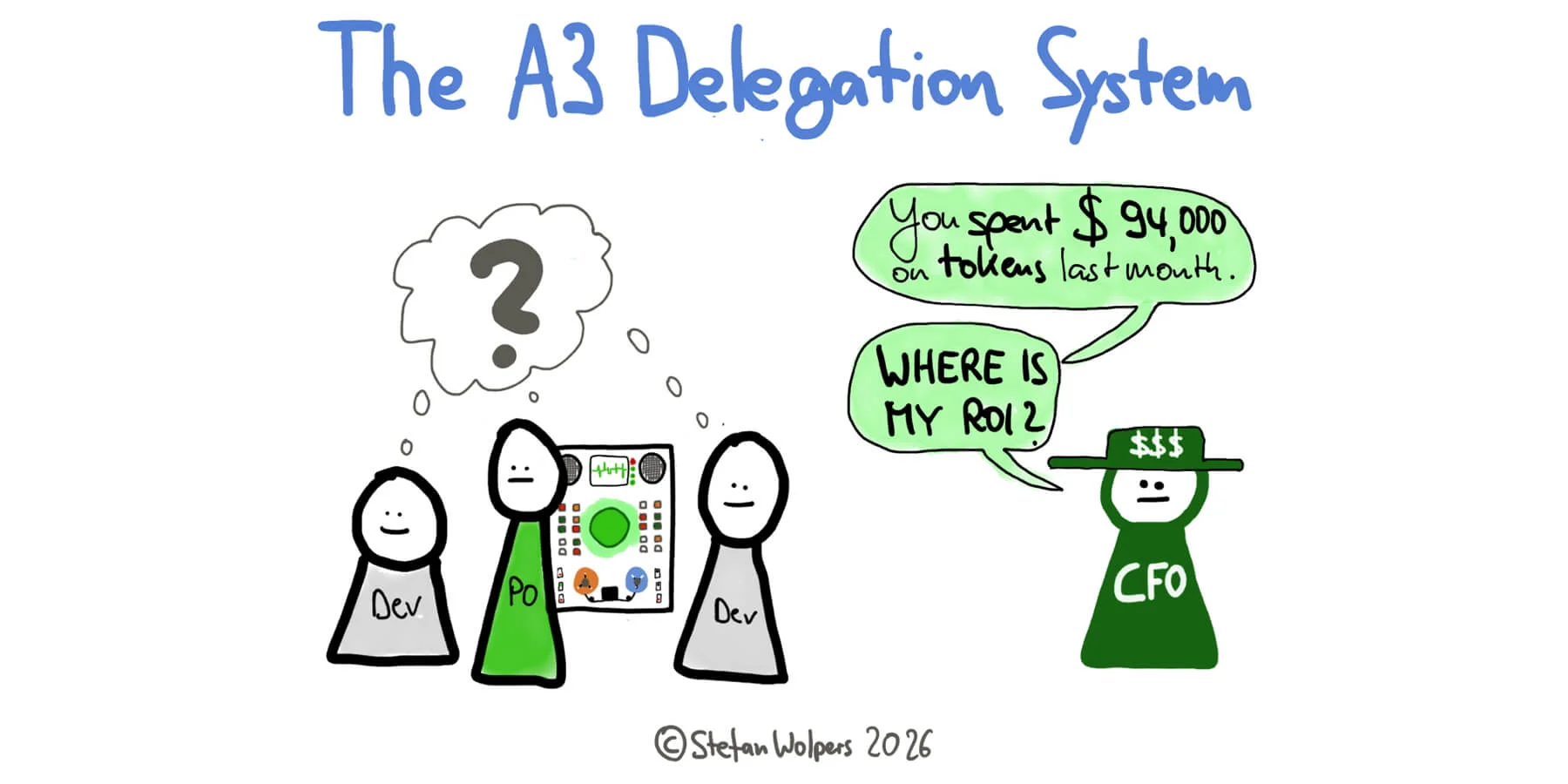
The A3 Delegation System Uses Agile Practices to Keep AI Workflows Accountable
AI delegation can create a new kind of project debt
AI workflows can accumulate the same hidden debt as poorly managed software projects: unclear ownership, thin documentation and work that goes unchecked. The A3 Delegation System applies familiar Agile practices to make those risks visible, matching each task to an appropriate level of AI involvement. The underlying concern is practical: when a process relies on an AI system, teams still need to know who is responsible for the result, how that result is checked and what happens when the system’s performance changes.
This kind of debt can build quietly. A team may introduce a tool to speed up a recurring task, then let the process spread without recording its assumptions or assigning anyone to review it. The work can appear efficient while responsibility becomes harder to trace. That’s especially relevant when AI output passes through several people or systems before reaching a customer; each handoff can make it less clear who is expected to catch an error.
Set boundaries for AI delegation
Presented at the 76th Hands-on Agile Meetup, the system groups tasks into three categories: Assist, where AI drafts but a person owns the result; Automate, where AI acts under explicit rules and a regular audit cadence; and Avoid, where human handling protects trust. These labels give teams a shared vocabulary for discussing what a tool is allowed to do. They also make it easier to ask whether a task is suitable for delegation at all, rather than treating automation as the default goal.
The boundary needs active management. A task that’s produced acceptable results for four weeks may still be drifting from Assist into Automate without anyone making that decision. The change might happen through habit: people rely on a draft more often, spend less time checking it or quietly extend the workflow to new cases. That’s not the same as a considered change in responsibility. The category should reflect how the task is actually being handled, not just how the team described it when the workflow began.
The framework also draws on a six-stage Delegation Lifecycle to identify failures in delegation, documentation and ownership before they affect customers. The point is to give teams checkpoints for unattended AI work, not assume that a workflow remains safe because it worked at first. A lifecycle can help structure those checks: teams can examine who approved the delegation, what instructions govern it and who notices when the output no longer meets expectations. The value comes from using the stages to prompt concrete decisions, rather than treating them as process paperwork.
Make quality and cost decisions explicit
Teams can assign each task class a model tier—local, mid-tier hosted or frontier—based on cost and the consequences of failure. This creates a way to discuss whether a more capable system is justified for a particular job, or whether a less costly option is sufficient. The choice shouldn’t be made on price alone. A task with modest consequences may tolerate occasional correction, while work that affects a customer’s trust calls for closer scrutiny, regardless of how quickly the model produces an answer.
“Good enough” should be a deliberate choice with an owner. That phrase can hide a real trade-off: a team may accept more editing to reduce costs, or pay more to reduce the time people spend correcting output. Either way, someone should be able to explain what standard the team chose and who is accountable when the work falls short. This is more significant than it looks. Without an owner, a quality threshold can become a vague hope shared by everyone and enforced by no one.
The guidance also warns teams to keep proprietary process data out of large labs, since that knowledge may be a competitive asset. That puts data handling inside the delegation decision. A workflow can be useful and still be a poor fit if it requires sharing information the organization considers sensitive. Teams need to understand what information enters the system, where it goes and whether the task can be done without exposing valuable internal knowledge.
A single Definition of Done may suit a Scrum team, but AI tasks need criteria tailored to their work. The proposed checks cover verification, disclosure of provenance, data hygiene and the required level of sufficiency. Those checks make “done” more specific: a draft might need a person to verify its claims, while another task may require a clear indication of how the output was produced. The right criteria depend on the work, so teams should be able to explain why each check applies.
Use audits to catch gradual drift
Monthly reviews should look for changes in output quality and sufficiency, whether work can be reversed, and whether human review is becoming perfunctory. A calendar review gives teams a regular chance to compare the intended process with what people are doing in practice. It can also surface changes that aren’t obvious from individual outputs, such as a growing dependence on AI drafts or a widening set of tasks handled without a fresh decision about oversight.
Approving a draft in four seconds, the presentation argues, is rubber-stamping rather than review. The point isn’t that every output requires a lengthy inspection. It’s that a review step only adds protection when someone has time and responsibility to assess the result. And this is the part most people overlook: a checkbox can show that a person touched the workflow without showing that the person meaningfully checked the work. A useful audit should examine the quality of review, not just whether review was recorded.
Retrospectives and a documented audit trail can make these checks part of normal team practice while providing evidence for CFO, CTO and procurement due diligence. Retrospectives can help teams discuss where the workflow is saving effort and where it creates new work, such as corrections or escalations. An audit trail can record the decisions behind delegation and later changes. Neither guarantees a good outcome. They make it easier to ask what happened, who made the call and whether the original assumptions still hold.
What the system means for teams
If you’re working in this space, the useful question isn’t simply whether AI can perform a task. It’s whether your team can define acceptable output, assign ownership and notice when the process changes. The A3 categories offer a starting point for that conversation, while lifecycle checkpoints and audits can turn it into a repeated management practice. Here’s the thing: a workflow that saves time but obscures accountability may only be shifting the work to a later stage.
Teams should expect delegation choices to need adjustment as they learn where a system performs well and where people still need to intervene. That calls for clear criteria and a named owner, plus enough documentation for another person to understand the process. Shortcuts may be appropriate for low-consequence work. Not every task needs the same degree of scrutiny.
The proposal’s strength is its emphasis on explicit choices: what to delegate, what standard to accept and who will check the result. Its limits are just as practical. Categories and review schedules won’t help if teams treat them as static labels or conduct audits that merely confirm the process exists. The test is whether those routines change decisions when quality, reversibility or human oversight starts to slip. That said, making the work visible is a reasonable first step toward keeping AI delegation accountable.