Why Switching to a Cheaper AI Model Can Raise Workflow Costs
Lower token prices and stronger benchmark scores don’t capture the work of revalidating business workflows after an AI model change.
Artificial intelligence and machine learning news
Found 481 articles
Lower token prices and stronger benchmark scores don’t capture the work of revalidating business workflows after an AI model change.
VLM adoption now depends on reliable, cost-effective cloud operations as much as model advances, with observability and governance central to production.
AI agents can query databases and trigger workflows under their own credentials. Their permissions need to match their ability to act.
Genkit flows make AI work typed and testable, but multi-step jobs still need retries, worker pools and recovery for completed tasks.
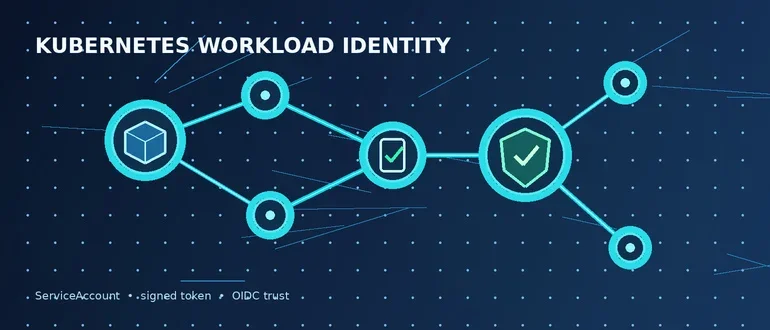
Kubernetes workload identity links ServiceAccounts to verifiable, short-lived tokens, enabling federated cloud access while clarifying authentication and authorization.
A Bronto review maps 64 AI SRE tools across seven categories, showing how products sharing one label tackle different operational problems.
ScyllaDB pairs Cassandra-compatible queries with shard-per-core processing for Java systems that need horizontal scale and predictable performance.
The A3 framework assigns AI tasks to Assist, Automate or Avoid, with task-specific checks and monthly audits to catch drift before it reaches customers.
Senro turns pipelines into Go programs with immutable plans, step caching, monorepo fan-out, change-based filtering, and webhook trigger decisions.
Both services support HSM-backed keys and envelope encryption, but their Java workflows differ in naming, rotation, authorization and data key handling.
Architecture Review Boards are adding AI oversight for data governance, model lifecycle, explainability, security, and ongoing monitoring.
The companies will resell each other’s hardened software artifacts as teams face rising dependency risks and a persistent gap between security priorities and practice.
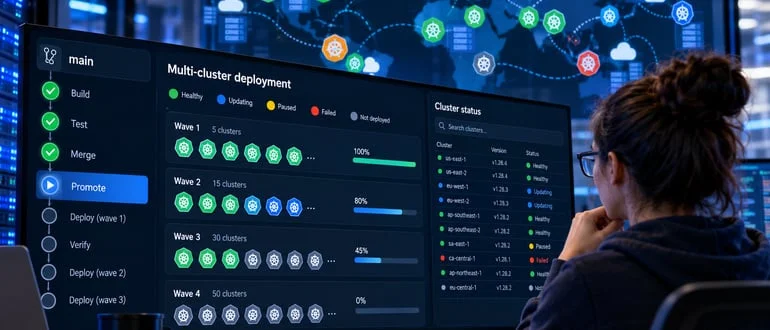
At hundreds of clusters, GitOps needs release tracking and verification gates to make staged rollouts safe and visible.
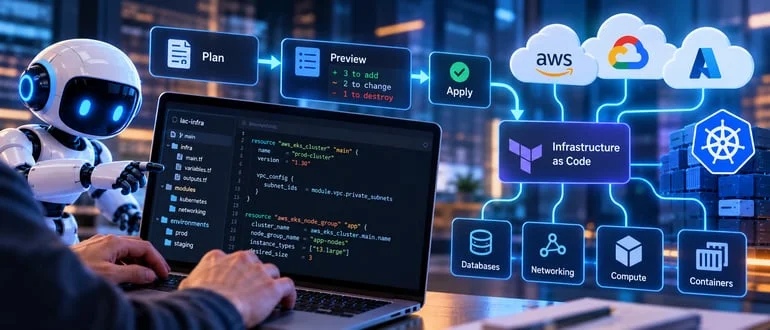
IaC makes Kubernetes upgrades and hybrid infrastructure changes reviewable, while letting AI agents prepare changes for human approval.
MySQL can return related order data as one JSON document and apply edits back to relational tables, though writes have some sharp edges.
Google Cloud Secret Manager’s version model can leave Go services pinned to startup values; mamori addresses that with live reloading.
Cloud Monitoring, Logging and Trace give teams a view of model usage, request latency, token consumption, errors and agent steps.
Flink’s built-in CEP finds ordered event patterns across time, addressing a class of real-time problems that filters and aggregates don’t cover.
METR’s estimate puts Claude Opus 4.6 at 17.8 hours on clean tasks and 6.4 on messy ones, highlighting the value of recovery and adaptation.
Visa SRE Sai Joshitha Kathari moved Kubernetes health checks into Jenkins, giving teams faster rollout feedback and clearer paths to failures.