NFL Rules Push Saquon Barkley to Sell His Polymarket Stake
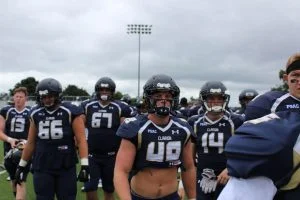
The NFL is applying its gambling restrictions to prediction-market investments, and Saquon Barkley is the first player publicly known to have sold a stake as a result. The Philadelphia Eagles running back told Front Office Sports on October 28 that he’d divested his equity in Polymarket to comply with league rules. That makes the policy tangible: a player’s financial relationship with a company can trigger the same boundary as a public endorsement, even when the investment was made before the league clarified its position.
The decision puts the NFL’s position in sharp relief. The league treats prediction-market companies like gambling businesses, even as other major sports organizations embrace them. For players, the distinction reaches beyond endorsements to ownership and access to a fast-growing category of sports-related contracts. If you’re working in this space, the practical question is whether the league sees a company’s product as a financial market or as a form of sports wagering. The answer can shape which business ties players are allowed to keep.
The NFL draws a firm line for players
Barkley invested in Polymarket before the NFL told players they couldn’t own stakes in prediction-market companies. The league reviews its endorsement, investment and training rules with players before each season, putting these restrictions within a broader set of conduct expectations. It declined to comment on Barkley’s specific case, so the public account of his divestment comes from his interview with Front Office Sports.
The restriction extends beyond ownership. By January 2026, Kalshi and Polymarket were already barred from using NFL players as endorsers or brand ambassadors. The NFL classifies prediction markets under its gambling policy, bringing them within rules that govern sportsbook relationships. In practice, that classification closes off several kinds of commercial ties at once: a player can’t simply avoid appearing in an ad while keeping an investment in the company.
That policy creates a notable divide across leagues. Major League Baseball named Polymarket its Official Prediction Market Exchange on March 19, 2026. The NBA named both Polymarket and Kalshi its preferred exchanges on October 26, 2026, granting them marketing rights and access to league intellectual property. Those deals show that the companies can be treated as sports partners by some leagues, while the NFL applies a gambling label that limits players’ individual ties to them.
NBA players can invest in the exchanges and appear in their marketing, though they can’t promote contracts tied to NBA games. That carve-out suggests a distinction between promoting a platform and endorsing a market tied directly to a player’s own competition. NFL players face a broader restriction, despite the market’s appetite for football events: the league says trading on the season’s first Sunday included $1.8 billion in football contracts, more than half of that day’s total. The numbers here are striking, but they also underline why the league may regard the category as closely connected to its games.
A dispute over who oversees sports contracts
The NFL has taken its view to the Supreme Court. In an October 8, 2026, amicus brief supporting New Jersey’s petition in Flaherty v. KalshiEX, case No. 26-299, the league argued that sports-event contracts are gambling and should fall under state gambling laws, rather than qualify as financial swaps under exclusive federal oversight. That argument reaches beyond player rules: it asks which legal framework should govern contracts whose value depends on sports outcomes.
New Jersey sought review on September 2, 2026, after the Third Circuit ruled 2-1 in April that the Commodity Futures Trading Commission has exclusive authority over sports-event contracts. Kalshi spokesperson Elisabeth Diana said the CFTC’s ongoing rulemaking will address many of the NFL’s concerns, adding that the agency already has authority over sports-related event contracts. The competing positions turn on how these products are classified, and which authority gets to set the rules that follow from that classification.
The Supreme Court granted Kalshi an extra 30 days to respond to New Jersey. Its filing, initially due October 8, is now due November 9. The case could clarify the oversight framework the leagues and prediction-market companies must navigate, while the NFL’s current rules already make the practical consequence clear for its players. A court process may take time; the restriction is already shaping business decisions.
What the divide means for players and leagues
This is more significant than it looks. A league’s classification of prediction markets can affect not only corporate partnerships, but also whether athletes may hold an ownership stake or lend their name to a platform. That leaves players operating under different rules depending on their league, even when the companies and products are similar. Barkley’s reported divestment gives those differences a direct human consequence.
And yet, the NFL’s position sits alongside evidence of substantial demand for contracts connected to football. That tension may keep the issue in view as leagues decide how to handle partnerships and player relationships. The league’s brief makes clear that it sees oversight as part of the dispute, while its existing policy already sets a boundary for players. The central question is whether that boundary will continue to stand apart from the approach other leagues have taken.
For players, the immediate lesson is practical: investment decisions can carry league consequences even when they don’t involve a public campaign or a game-related contract. (And this is the part most people overlook.) A company’s sports partnerships don’t automatically determine what its athletes can own. The league’s own rules do. A dividing line with real costs.
Sources
- MLB names Polymarket exclusive Prediction Market Exchange partner and signs agreement with CFTC to establish … (Major League Baseball)
- Giannis Antetokounmpo Teams Up With Kalshi (Kalshi)
- NFL Told Saquon Barkley to Divest Polymarket Stake (Front Office Sports)
- No. 26-299, Flaherty v. KalshiEX, LLC – Brief of Amicus Curiae National Football League (Supreme Court of the United States)