Keeping LLM Pipelines Reliable: Overcoming Workflow Fragility with Kafka and Temporal
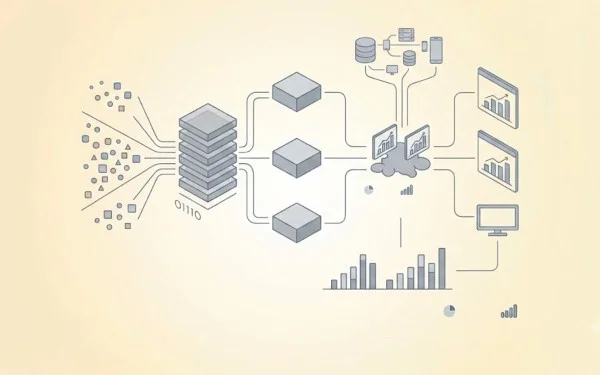
A production-level LLM (Large Language Model) pipeline isn't simply about delivering prompts and responses. It involves intricate processes like retrieval, prompt rendering, model inference, output shaping, validation, persistence, and subsequent actions. This complexity explains why what appears stable in a demo can falter under real-world conditions. The operational challenges arise from the surrounding workflow rather than the model call itself. Factors such as API rate limits, the necessity of application-level checks for structured outputs, and failure risks from external calls complicate matters considerably.
Understanding the Complexity of LLM Pipelines
At first glance, the process of generating text through LLMs might look straightforward. You simply provide a prompt, receive a response, and voila! However, the truth is much more complicated. Each component of the pipeline plays a crucial role. Retrieving relevant data is the starting point; effective data retrieval directly impacts the quality of the model's subsequent output. Once data is fetched, prompt rendering involves formatting this information appropriately for the model. The way a prompt is structured can markedly affect the quality of the response.
Then you have model inference, where the actual processing takes place. This is where the magic of LLM occurs. But while the model is generating its output, other factors come into play—output shaping modifies the raw model output to ensure that it's usable and meets specific application requirements. Validation is up next, confirming that the output is not just correct but also aligns with any existing business logic.
Finally, there's persistence and subsequent action. This is the stage where the generated content is stored or sent to other services. With so many dependencies, it's clear why the simplicity of a demo might not reflect the ruggedness required in operational environments. This multi-faceted nature of LLM pipelines also highlights why many implementations struggle to handle burst traffic or unexpected challenges.
Identifying Sources of Failure
Failures in production systems often occur between distinct steps rather than within the core model prompt. For instance, when an API receives a request, loads context, sends a model call, parses the response, triggers a downstream action, and logs the activity, potential breakpoints exist at every stage. If a model's output is successfully generated but the network connection fails before relaying that information back, the system struggles to determine whether to retry the operation or treat it as complete. Each of these points serves as a potential failure mode, illustrating the fragility of complex leanings.
The need for robust error handling becomes evident here. Consider this: if the API returning data is slow or occasionally unresponsive, retries become critical. However, not all systems are designed to handle idempotency effectively. Kafka’s default delivery model guarantees at least once delivery, while Temporal encourages idempotent operations, necessitating a pipeline design that prioritizes durable state and idempotent writes. Without a well-structured approach to handle these types of issues, organizations risk compounding errors that can propagate throughout the system.
Technical Challenges in LLM Operations
The technical hurdles go beyond just the architecture of the pipeline itself. Latency can vary, causing bottlenecks during peak usage. API calls from the model to other services, especially those that rely on third-party systems, can introduce delays. This is the part that most people overlook: that the core LLM model might run optimally, but if the various integrations are not working as expected, the entire process slows down, leading to user dissatisfaction and potential loss of trust in the system.
Moreover, maintaining state and ensuring backups in real-time playback can be further challenging. Storing large volumes of data increases the risk of losing state consistency, especially if session management isn't effectively implemented. Unexpected outages in integrated services can interrupt operations and create not just latency issues but complete breakdowns in service availability from the end-user perspective.
Industry Context and Comparable Systems
Historically, production systems across tech industries have faced similar struggles. For instance, the transition to microservices architectures posed issues in orchestration and service coordination. Early adopters often found that moving from monolithic applications to distributed services required a paradigm shift in how they understood system failures—it's rarely the components that are at fault, but rather how they interact. LLM pipelines, living as they do within rapidly evolving software practices, echo this experience. Another comparable case is real-time communication systems. They, too, have to manage reliability while providing low-latency interactions, leading to the creation of intricate protocols to mitigate failure points.
In various sectors, organizations deploying AI have faced varying degrees of service interruption. Consider the banking sector; financial institutions have implemented rigorous measures around API reliability and data integrity, responding to the high stakes involved. These measures would empower LLM deployments with lessons learned in trust and reliability, as the financial industry's scale necessitates high-performance systems amid strict regulations.
Implications and Future Outlook
What this means for you, if you’re working in this space, is that rushing to adopt LLMs without understanding the intricacies of their operational workflow can result in frustrating user experiences. As more companies integrate LLM capabilities, best practices will likely evolve. You're already seeing some startups focus on managing these complexities off the shelf, but expectations must align with reality: a production-level pipeline isn't just about model accuracy but also ensuring stable integration points throughout the entire workflow.
Looking ahead, the need for standardized solutions that handle these failures gracefully becomes significant. The viability of LLMs hinges not just on mathematical advancements in model training but also on their reliability in diverse operational settings. Future developments in pipeline architecture and integrations may herald more resilient systems but will require ongoing scrutiny by both developers and end-users. As AI systems become more ubiquitous, the difference between successful and unsuccessful deployments will lie in the underlying operational strategies rather than just the intellectual property of the models themselves.