Enhancing Data Pipeline Integrity to Safeguard AI Model Performance
Jun 26, 2026
786 views
The 3:00 AM Incident That Altered Our Approach
Early one Tuesday morning, something went terribly wrong. The recommendation engine that fueled 30% of our revenue plummeted unexpectedly. Its accuracy plummeted from a staggering 94% down to a mere 58% in a single night. Immediate suspicion fell on the model itself, prompting the data science team to scramble—adjusting hyperparameters, retraining with fresh datasets, and conducting diagnostic tests. Yet, amid all this chaos, nothing improved. In the midst of the crisis, I was summoned to the war room just as the clock struck 3:00 AM. My instinct kicked in, and rather than asking what was wrong with the model, I probed, "What changed in the data pipeline?" To our dismay, everything had changed. A schema update from one of our vendors had turned a previously required field into an optional one, opening the floodgates to null values. Our feature engineering process was ill-equipped to deal with these nulls, ultimately allowing them to propagate. By the time our model received the corrupted data, a staggering 40% of our feature vectors were tainted beyond repair. The model wasn’t at fault; the data itself was deeply flawed. What followed was a frantic six-hour effort to roll back the schema change, rerun the pipeline, and restore normal operations. The resulting incident report was a harsh indictment of our processes, revealing a critical failure: "Lack of data validation allowed a breaking change to slip through undetected." This eye-opening experience underscored a pivotal lesson—we needed greater observability not only in our modeling processes but also throughout our entire data pipeline. The unseen complexities of our data flows could no longer be overlooked.The Invisible Problem: Data Quality Lies Hidden Until It Fails
Here’s a reality check: data pipelines often fail without warning. Monitoring tools can signal that your ETL jobs are completing successfully and your data warehouse is loading without issue, but that doesn’t guarantee the integrity of your data. In essence, it’s garbage in, garbage out. There are three primary ways data issues derail AI models operating in real-time:- Missing Values: When an upstream source stops populating a field and your pipeline lacks validation, the model receives NaN values it hasn't encountered during training. This leads to predictions that are little more than random noise.
- Schema Changes: Any changes from an upstream team—be it new columns, altered column names, or modified data types—can spell disaster if your pipeline isn't prepared. The consequence? It either crashes or worse, silently mismaps data.
- Distribution Shifts: Changes in the statistical properties of your data can lead to unrealistic outcomes, like values that exceed anticipated ranges. This discredits the foundational assumptions of your model and results in predictions that defy logic.
A Solution Emerges: Observability at Every Layer
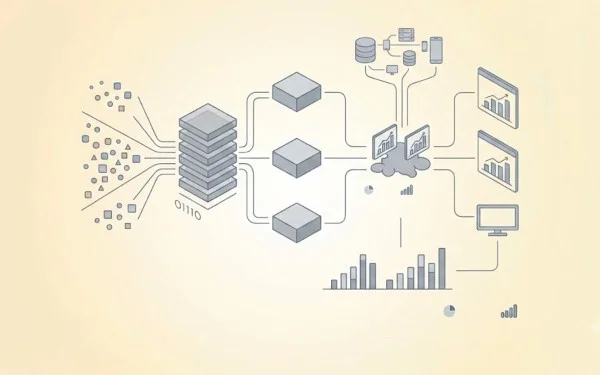
Realizing the need to combat these lurking data quality issues, I embarked on developing a three-layer observability framework using tools like dbt, Great Expectations, and custom validation methods. The objective was clear: prevent data quality issues from contaminating our models. In the foundational layer, dbt tests serve as the first line of defense, efficiently identifying data quality problems. These tests run post-transformation and halt the entire pipeline if they detect any issues. The beauty of dbt tests lies not just in their effectiveness; they're version-controlled and documented, automatically aligning with your transformation code. When a schema change occurs, you simply modify the test and commit it. It's a straightforward way for the whole team to stay informed about changes that could impact data integrity. In this rapidly evolving tech climate, fostering strong observability at every level of the data pipeline is not just advantageous—it's imperative. By doing so, we can mitigate the risks that hidden data issues pose before they escalate into full-blown crises.Testing Differences: Dbt vs. Great Expectations
Dbt tests are focused on maintaining the integrity of your data's structure, while Great Expectations targets statistical integrity. This distinction is pivotal. For example, consider an instance where a column meant to capture user ages reported values ranging from 18 to 65 consistently over two years. Then, without warning, ages like 200, 500, and even 1000 appeared. Dbt, in this case, wouldn't flag the issue, since all these entries are technically valid integers. In contrast, Great Expectations would catch this anomaly due to its statistical checks. Great Expectations performs validation checks that run subsequent to dbt tests. It aids in monitoring:- Value ranges to ensure ages lie between 18 and 120.
- Statistical properties like maintaining a mean event value between 50 and 200.
- Null rates ensuring fewer than 5% missing values in critical data fields.
- Distribution patterns to confirm that the event type distribution is consistent with historical data.
Implementing Custom Validation
While dbt and Great Expectations offer foundational checks, they don't delve into business-specific needs. That’s why we incorporated a layer of custom validation, tailored to our operational realities. By doing so, we integrate checks designed specifically for our data workflow. Here's how this custom validation operates:- Feature completeness requires at least 95% of populated features.
- Feature scaling ensures normalized features stay within expected ranges.
- Temporal freshness mandates that events are recent, ideally within the last 30 days.
- Business logic checks confirm that revenues reported are always positive.