**A Closer Look at May's CRAN Package Submissions**
In May, the Comprehensive R Archive Network (CRAN) saw a surge of 323 new packages, a noteworthy indicator of the ongoing vitality within the R programming community. Among these, I’ve sifted through the offerings to compile a list of the top 40 standout packages across eighteen diverse domains, such as Artificial Intelligence, Ecology, Finance, and Medical Statistics. This broad categorization underscores not only the depth but also the versatility that R continues to bring to various fields of research and application.
### Spotlight on Key Packages
The diversity in package submissions speaks volumes about the rising interest in applying R to tackle complex problems. For instance, the **corteza** package (v0.6.9) stands out in the realm of Artificial Intelligence. It provides a framework for Large Language Models (LLMs) from reputable sources like OpenAI and Anthropic, allowing them to operate in real-time during R sessions. This integration promises improved workflow efficiency for data scientists and researchers keen on leveraging sophisticated AI capabilities in their statistical analyses.
Furthermore, in the Computational Methods category, the **boids4R** package (v0.3.1) introduces an intriguing simulation environment for modeling flocking behavior based on Reynolds' classic rules. The addition of features like optional obstacles elevates its utility for educators and researchers designing simulations for ecological studies or complex systems.
### Implications for Data Practitioners
If you're entrenched in statistical modeling or data analysis, these new tools could meaningfully impact your workflow. For instance, the **ElicitationWizard** (v0.1.0) package aids in constructing Bayesian prior distributions using a user-friendly Shiny application. By tapping into advanced methodologies, you can improve the robustness of your statistical models.
That said, while the sheer number of packages is impressive, it’s important to evaluate the efficacy and usability of these tools critically. Not all submissions maintain the same standards, and some may require further refinement through community feedback. As practitioners, keeping a discerning eye on package reputation and support is vital for ensuring productive integration into your projects.
Besides highlighting these new tools, it’s essential to spell out the richness of the R ecosystem that fosters such a continuous influx of resources. This ecosystem not only cultivates innovation but also challenges users to stay engaged with the latest technological advancements.
As R continues to evolve and its applications expand, this month's crop of SCAN packages is an exciting reminder of the vibrant community committed to enhancing analytics and data science methodologies. Whether through computational advancements or innovative approaches to complex statistical problems, these contributions support a thriving collaborative framework that benefits us all.
Meta Analysis
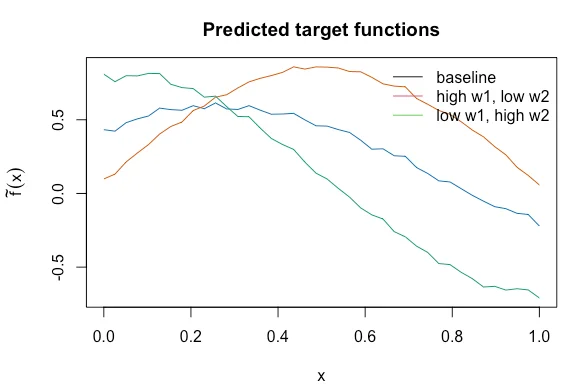
The latest iteration of MetaHunt (v0.1.0) offers a suite of privacy-focused tools for conducting meta-analyses across diverse studies. One standout feature is its integration of the denoised functional successive projection algorithm, which enhances the accuracy of basis selection. The library supports constrained weight estimation and applies a Dirichlet regression framework for study-level covariates, facilitating target prediction along with split/cross-conformal prediction intervals. The groundwork for this methodology was laid out in research by Shi, Imai, and Zhang (2026). Users can benefit from eight informative vignettes, including getting started guidelines and a comprehensive introduction to the package.
Probability
A recent addition to the R package collection is BetaDanish (v0.2.0), which introduces a four-parameter Beta-Danish distribution, along with a three-parameter submodel tailored for survival and reliability analysis. The package includes functions for density calculations, distribution analysis, quantile assessments, and random number generation, bolstered by the foundational work of Ahmad and Danish (2025). For practical insights, users have access to five vignettes, highlighting topics such as introduction and specific methods like Bayesian estimation.
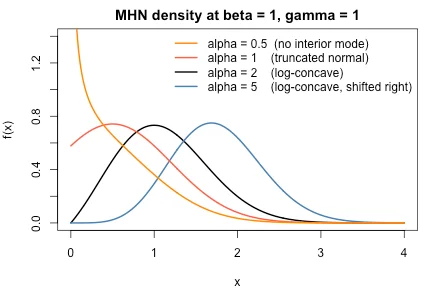
mhn (v0.1.0) is another notable tool, which provides functions for the density, distribution, quantile analysis, and random generation tied to the Modified Half-Normal (MHN) distribution. The underlying theory connects to various distributions, notably generalizing the half-normal and truncated normal distributions. This package incorporates advanced sampling techniques, as detailed in algorithms put forth by Sun, Kong & Pal (2023) and Gao & Wang (2025). The accompanying vignettes elucidate core concepts, such as Introduction and the necessary theoretical background.
Process Control
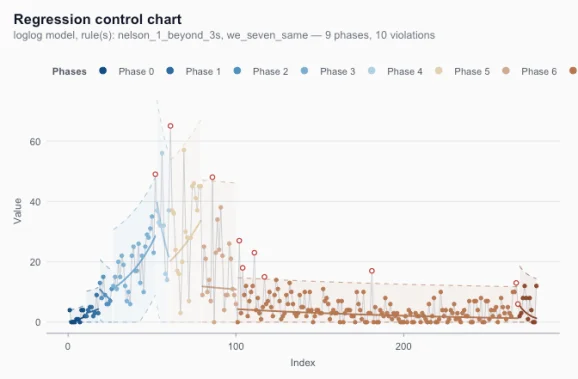
The shewhartr package (v1.3.0) is designed to enhance statistical process control. It merges traditional Shewhart techniques with modern, tidyverse-compatible interfaces. Features include not just standard control charts but also regression-based charts for monitoring process trends, along with advanced statistical tests like the Nelson runs test. The suite aids in average run length simulation and provides process capability indices, alongside guidance on Box-Cox transformations. For comprehensive background, refer to key studies like Montgomery (2019) and Nelson (1984). Eleven detailed vignettes are available, including practical guides like Getting started and Regression-based control charts.
Psychometrics
For those involved in personnel selection, the package personnelSelectionUtility (v1.0.2) offers a blend of traditional and contemporary utility analysis methods. Users can explore classification methods based on the Taylor-Russell model from Taylor and Russell (1939), as well as the monetary utility framework developed by Brogden (1949). The package includes five vignettes, featuring examples such as Reproducing canonical examples from the literature and Utility-analysis taxonomy for personnel selection.
Conclusion: Embracing the Next Wave of R Packages
As we wrap up this exploration of the latest updates in R packages, it's clear that the advancements coming out of the CRAN repository reflect a growing sophistication in data analysis and visualization. The new tools like
surveyframe and
icomb are not merely extensions of existing capabilities; they represent a paradigm shift in how researchers and data scientists approach survey research and time series forecasting.
For instance,
surveyframe's ability to support a structured survey workflow with advanced features—such as visual design, branching logic, and psychometric diagnostics—can significantly enhance the quality of data collection. These improvements aren’t just technical upgrades; they can drastically impact research outcomes by enabling researchers to craft more nuanced surveys.
Similarly, the
fable.bayesRecon, which focuses on probabilistic reconciliation within hierarchical forecasting, showcases a clear direction towards integrating machine learning techniques with traditional time series models. This cross-pollination has the potential to yield forecasts that are not only more accurate but also more attuned to the complexities of real-world data.
And let's talk about flexibility—the introduction of
mixtime speaks directly to data scientists who've struggled with time series data that spans various granularities. The capabilitiy to seamlessly work across multiple calendar systems is a real boon for analysts dealing with diverse datasets.
What’s exciting about this evolving ecosystem of R packages is the clear focus on user experience—be it through better visualization tools like
ggsql, which merges SQL querying with visualization, or utility packages like
DT2, enhancing DataTables integration.
So here's the takeaway: If you’re immersed in data science or research, these updates aren't just noteworthy—they're essential. Understanding and adopting these tools could elevate your work, offering insights and efficiencies you might not have thought possible. While the journey through this ever-expanding array of packages may seem daunting, the rewards of embracing these advancements could profoundly reshape your approach to analysis and interpretation.