Enhancing Form Validation with AWS Bedrock and Serverless Architecture
Streamlining form validation processes using AWS Bedrock agents can drastically reduce processing time and improve workflow efficiency.
Telemetry debt complicates observability for cloud-native teams, highlighting the need for actionable metrics rather than overwhelming data volume.
Manual data integration is fraught with challenges; automated synchronization can mitigate these issues if approached thoughtfully.
Java developers face common headaches with version management; Jolta offers a practical solution derived from fixing competitors' issues.
Vector retrieval can falter when answers rely on complex relationships; understanding this can improve search effectiveness.
Traditional JMeter tests often miss critical factors, compromising their ability to accurately reflect production loads and user behavior.
Agentic SDLC enhances software development by integrating AI agents throughout the process, allowing developers to focus on key decision-making.
Integrating human oversight into production agentic systems is essential. Understanding where and how to implement this involvement drives effective design.
The WNBA removed a video of Paige Bueckers and Angel Reese discussing a $400 bet after backlash, citing its inconsistency with league betting policies.
Improve Spark performance on Databricks by focusing on shuffle tuning, skew mitigation, and Z-Ordering for efficient data management.
A critical look at how autonomous systems can be exploited through misinterpreted instructions, emphasizing the need for tighter security measures.
The New York Mets and Novig have entered a historic partnership to fuse baseball with prediction markets, enriching fan interaction and experience.
Spring AI 2.0 elevates language models by integrating Retrieval-Augmented Generation, allowing access to proprietary data and improving functionality.
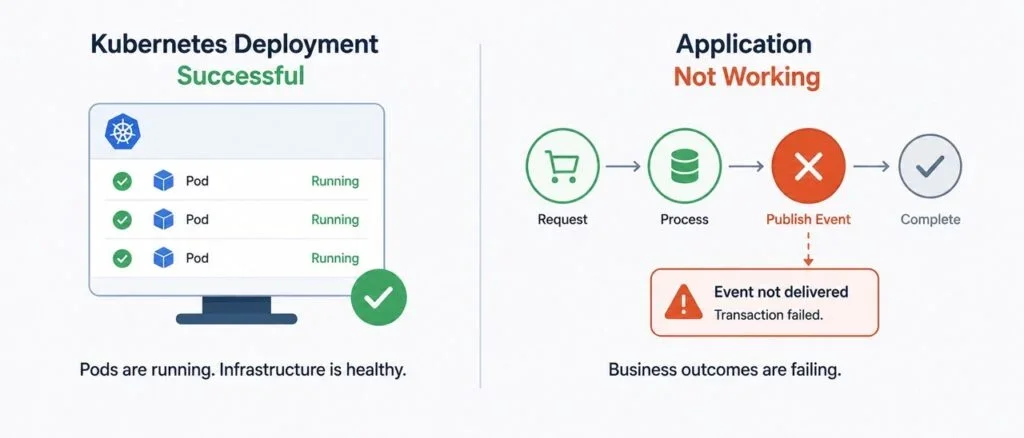
Kubernetes ensures infrastructure is operational but doesn't guarantee application functionality; successful deployments may mask critical issues.
Effective alerting is vital for maintaining stability in production environments, especially in today's AI-driven software landscape.